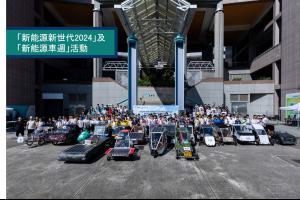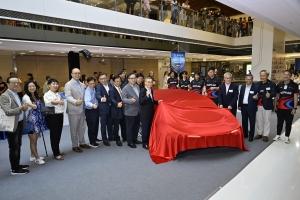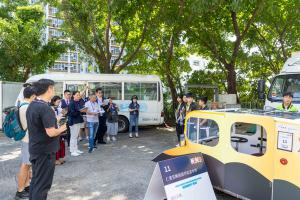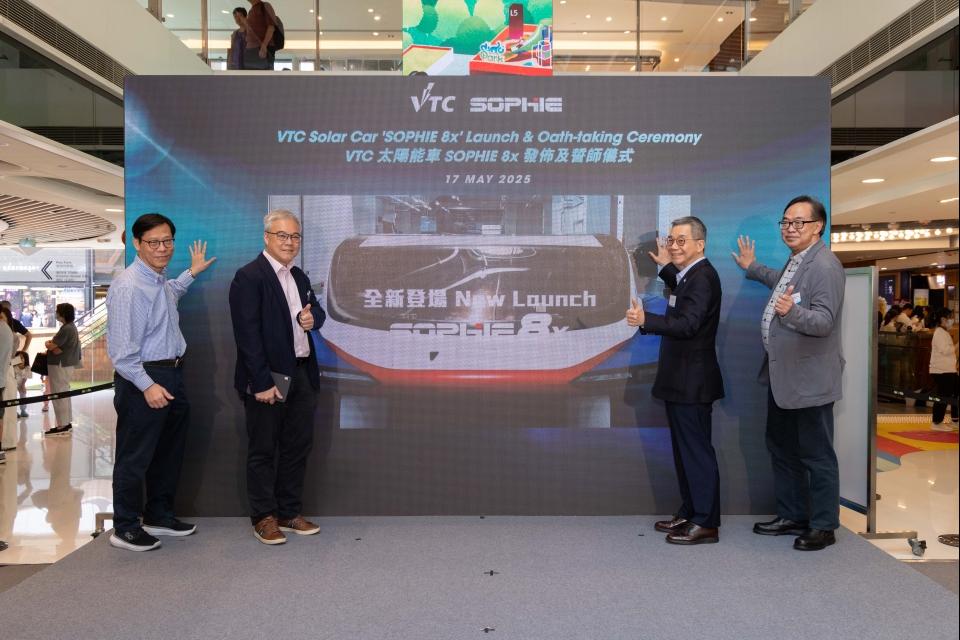
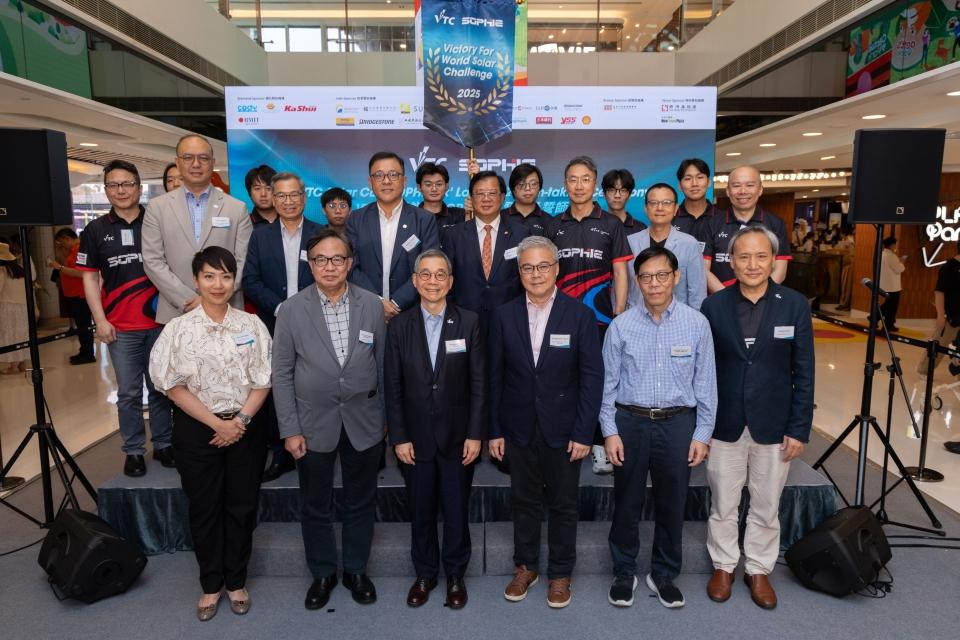
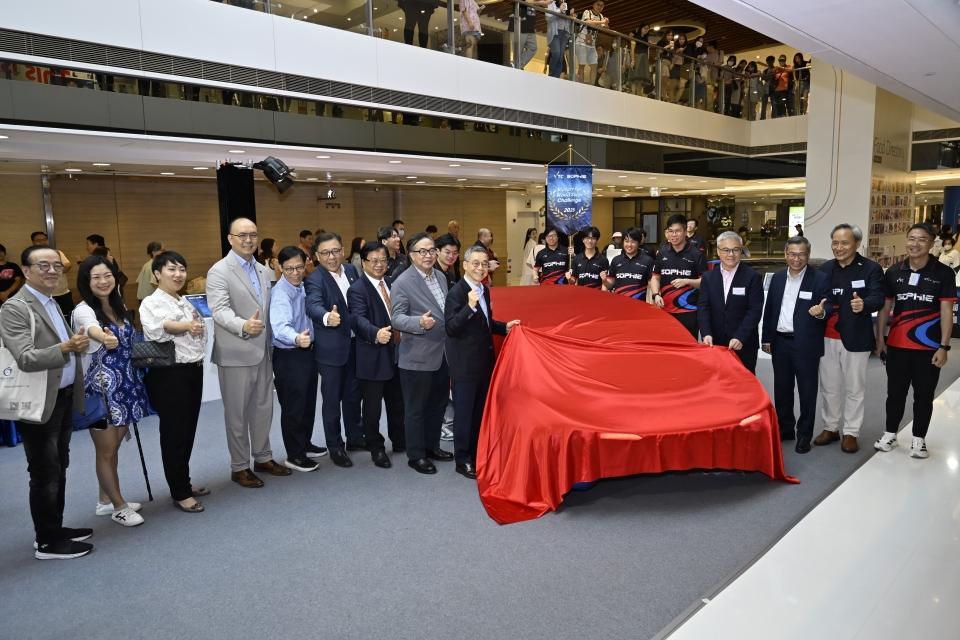
Drawing upon years of experience in solar car competitions, the Engineering Discipline of the Vocational Training Council (VTC) has developed an innovative motor system. Combined with a state-of-the-art motor controller, this system has culminated in the assembly of SOPHIE 8x, a highly enhanced solar vehicle. This new vehicle model aims to achieve remarkable results at the 2025 World Solar Challenge held in Australia, not only representing a technological breakthrough but also meeting the latest competition regulations.
The adjusted competition regulations include moving the competition from mid-October to 24–31 August (i.e., from spring to winter in Australia), thus shortening the daylight hours during the competition. Accordingly, the SOPHIE design team rebuilt the weather and road condition models to optimise the energy usage and racing strategy. Collaborations with companies in Guangdong led to the development of in-wheel permanent magnet synchronous motors, which are about 18% lighter than those in the 2023 SOPHIE 8. The controller uses a third-generation silicon carbide semiconductor to improve energy conversion efficiency.
Additionally, the regulation limited the maximum battery capacity to 15.27 kWh. To minimized battery pack weight, SOPHIE 8x adpot a 400-Wh/kg pouch type lithium-ion battery cell, and the total weight of its 15.2 kWh battery cells is only about 40 kg. The modular design allows the shipping and reassembly of battery pack in Melbourne.
The restriction changes have only fuelled the determination of the SOPHIE team’s engineers, each of whom met the challenges by collaborating to design a specifically tailored motor system. Faculty and students in the Engineering Department used advanced simulation software to meticulously analyse historical weather and road data from previous competitions for design and optimisation. Multiple simulations and practical tests were conducted to validate the data, leading to the development of a new drive motor system. Together with a carbon-fibre body design, the aesthetics, performance, and energy efficiency of SOPHIE 8x have been optimised for competition.
With the launch of SOPHIE 8x, the Engineering Discipline continues to advocate the use of new energy sources across various modes of transportation in both schools and communities, thus advancing Hong Kong’s green transport industry.
World Solar Challenge Introduction:
The World Solar Challenge began in 1987, held every two years. It gathers solar cars from universities and companies worldwide for technical competition. The long-distance race's harsh weather and varied terrain demand high efficiency and reliability from the solar cells on each car. Over 10,000 participants have taken part, including teams from Cambridge University in the UK, Stanford University in the US, and Tokai University in Japan.