


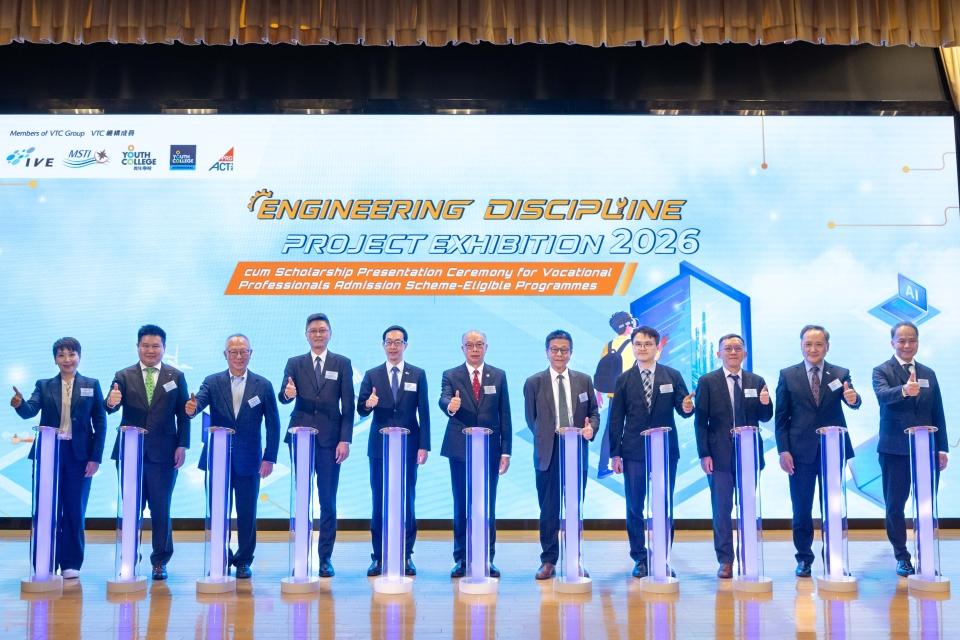
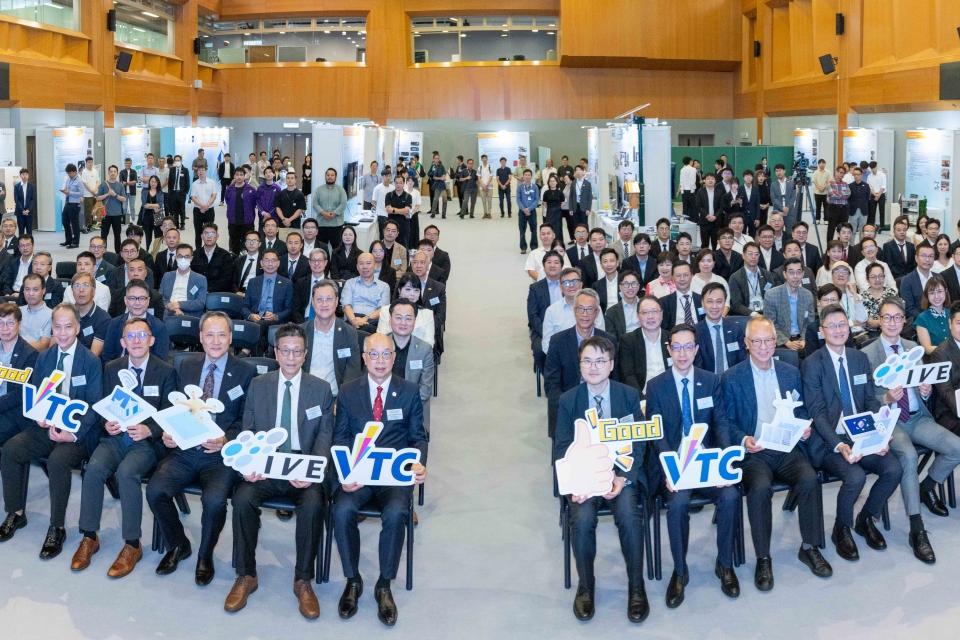
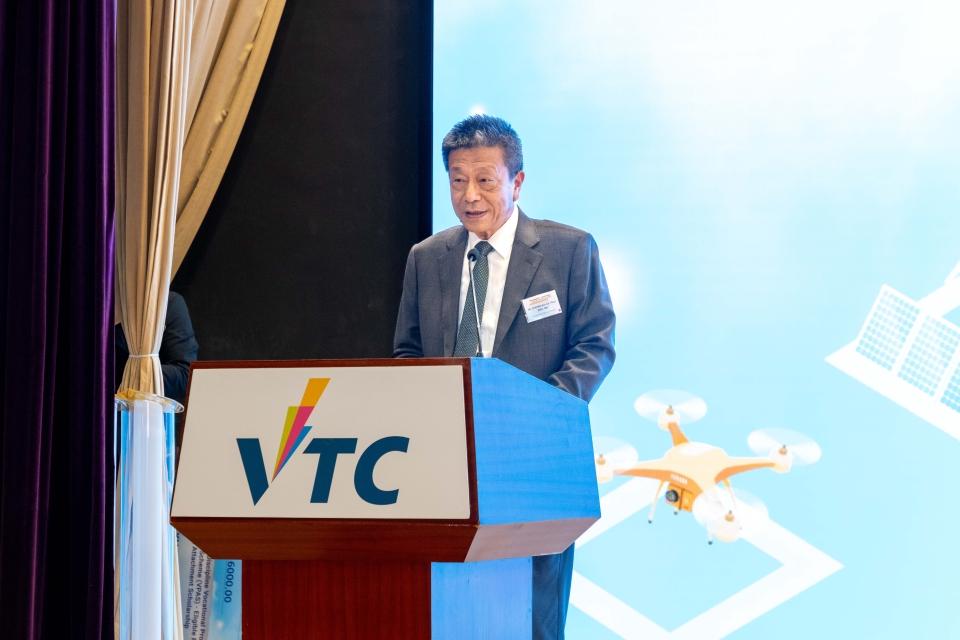
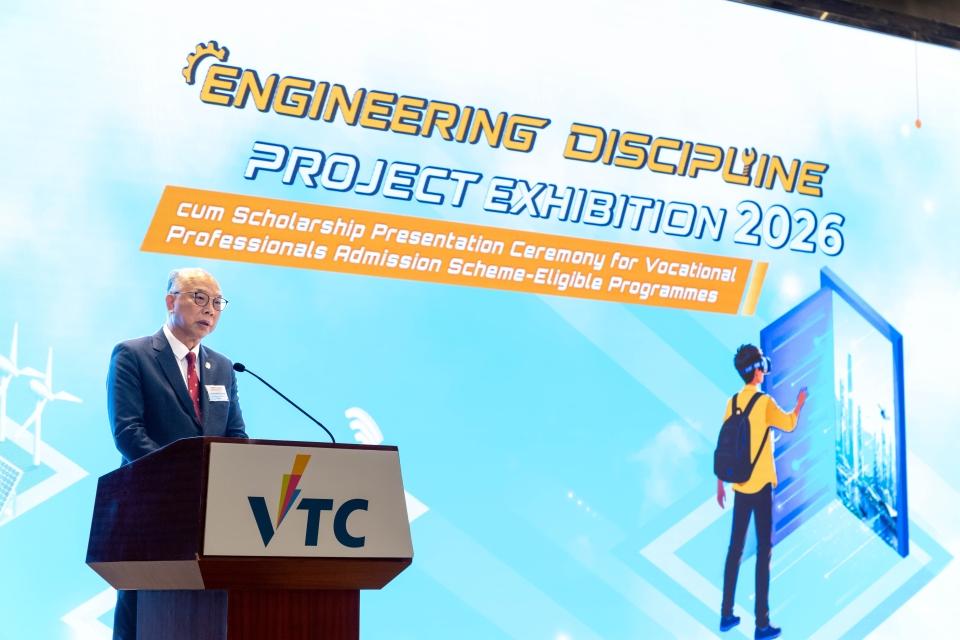
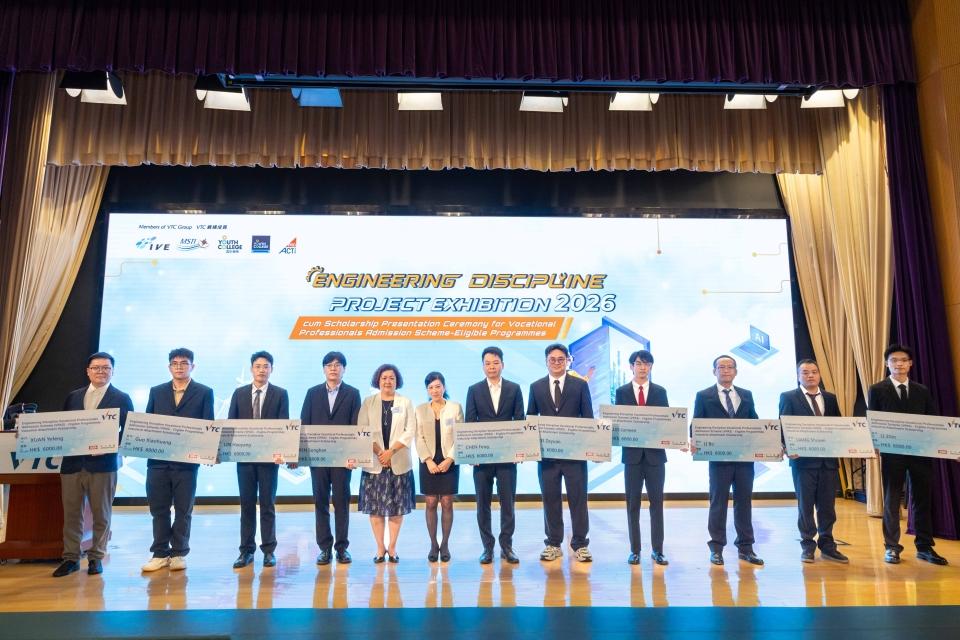
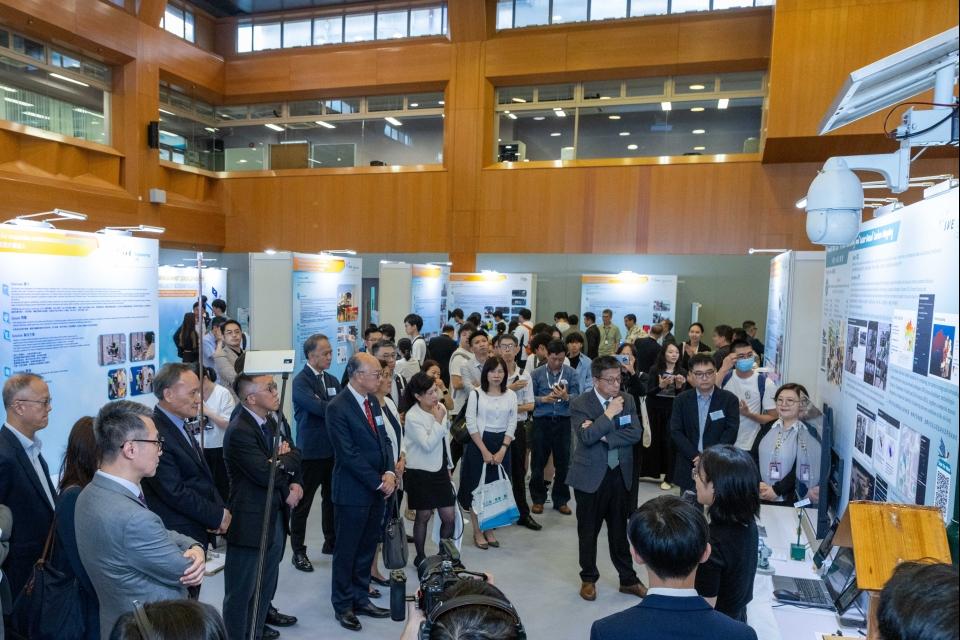
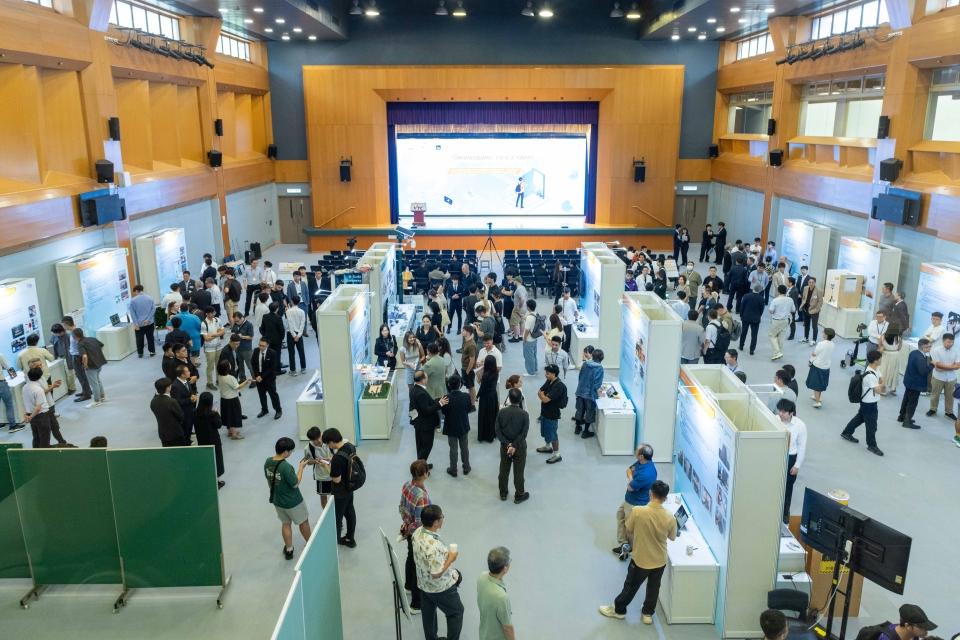
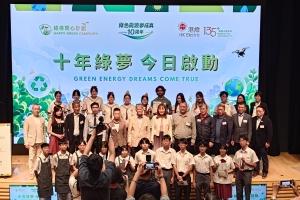
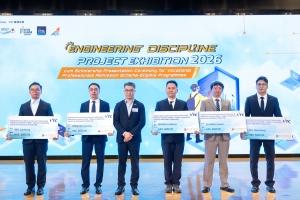
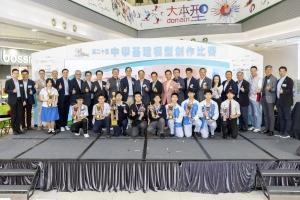
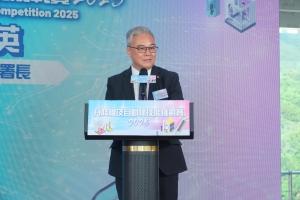
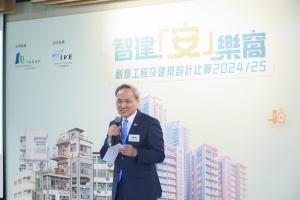
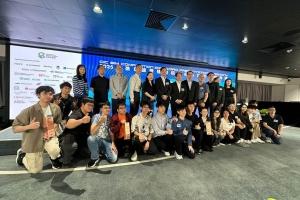
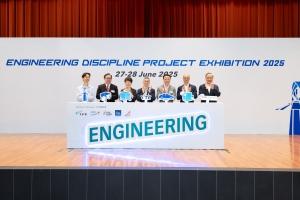
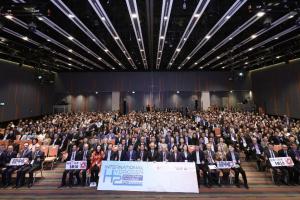
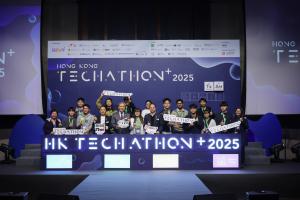
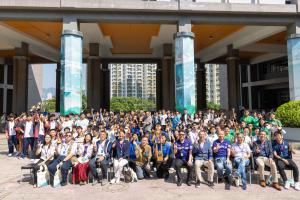
The annual Engineering Discipline Project Exhibition serves as a platform for students to translate academic knowledge into creative, real-world solutions. This year, the exhibition’s grand Kick-off Ceremony was held on 2 July 2026 at the Hall of IVE (Sha Tin), running alongside the prestigious Scholarship Award Presentation Ceremony for Vocational Professionals Admission Scheme (VPAS)-Eligible Programmes Undertaking Engineering Industrail Attachment.
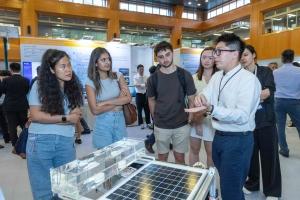
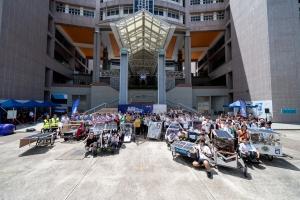
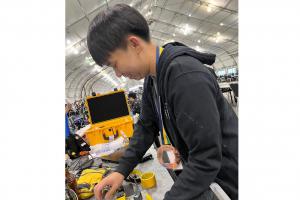
Staged on 2 and 3 July 2026, the two-day exhibition showcased more than 20 outstanding student projects across multiple engineering fields were presented. The projects addressed key societal challenges, including: urban renewal and sustainable development, environmental conservation, occupational safety and health, smart city technologies, and community support and inclusive design. Each exhibit clearly demonstrated the technical expertise and inventive vision of the next generation.
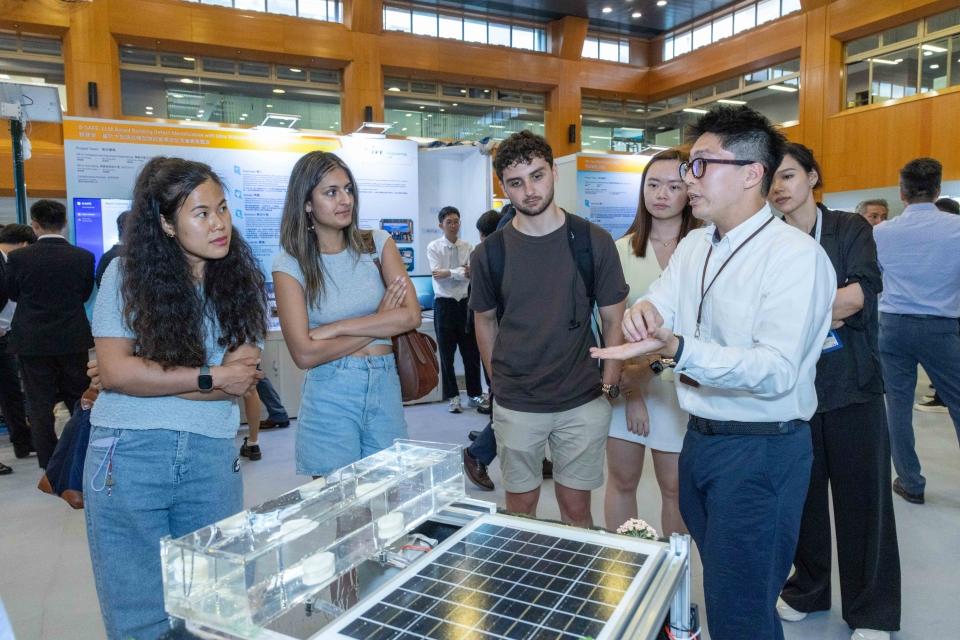
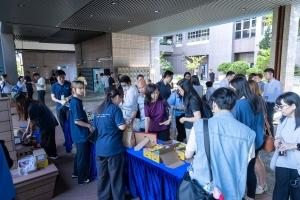
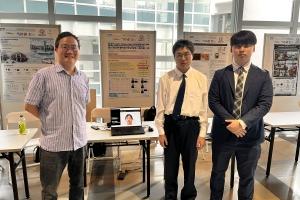
We were privileged to welcome Ir Prof Frank Chan, President of the Hong Kong Institution of Engineers (HKIE), as our Guest of Honour. The event also drew distinguished guests from government, industry, and academic sectors. Attendees were guided through the exhibition, engaging in meaningful, face-to-face dialogues with student teams to appreciate the design concepts behind their creations and witness the breakthroughs of these emerging talents.
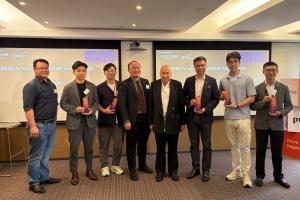
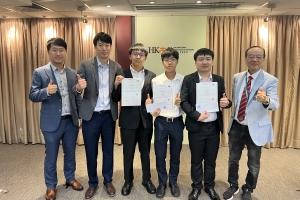
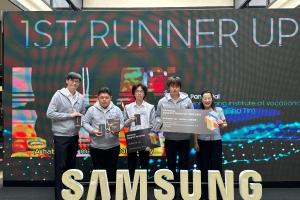
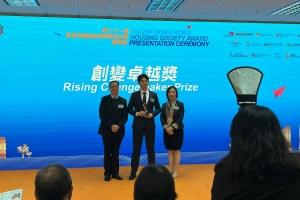
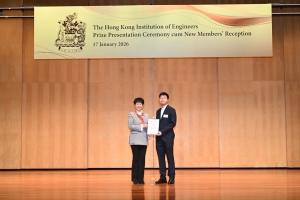
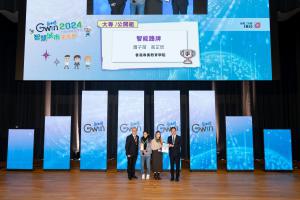
Furthermore, 11 representatives from 8 sponsor corporations graced the stage to personally present scholarship awards to their respective non-local student recipients, in recognition of their excellence during industry attachments, while also celebrating the fruitful outcomes of industry–academia collaboration.
Featured Projects:
|
|
Designed by |
Project |
|
1 |
HD in Computer and Electronic Engineering
HD in Surveying EG114111 |
B-SAFE: LLM Based Building Defect Identification with Ultra Wideband Positioning and Dashboard Integration
B SAFE operates via a five stage workflow: photo capture, indoor positioning, mobile upload, cloud based AI analysis, and a dashboard for stakeholders. Ultra Wideband (UWB) anchors pre-installed in buildings provide precise indoor positioning via Time of Flight (ToF) ranging. For defect analysis, B SAFE utilises a multimodal Large Language Model (LLM) to classify defects (e.g. concrete spalling, wall cracks, peeling paint), generate risk assessments, and recommend actions.
By linking visual evidence with precise coordinates, B SAFE creates traceable “Digital Building Medical Records”, streamlining inspection and remediation workflows end to end. |
|
2 |
EG114143 |
Towards Net Zero: AI Bird Monitoring and Laser-Based Carbon Mapping
Achieving net-zero carbon emissions requires innovative approaches that integrate ecological monitoring with advanced carbon assessment techniques. This project presents a multidisciplinary framework combining Land Surveying, Geographic Information Systems (GIS), Remote Sensing, and Artificial Intelligence (AI) to evaluate biodiversity and carbon dynamics within urban environments in support of net-zero objectives.
The initiative focuses on three interconnected objectives: (1) To analyse avian ecological patterns through AI-driven visual and acoustic detection, to identify bird species, monitor their frequency, and understand behavioural patterns. (2) To evaluate site-level carbon neutrality by estimating tree carbon storage and surrounding carbon emissions using laser-based techniques AND cross-disciplinary methodologies from the Department of Health and Life Sciences (HLS), constructing a composite measure designed to evaluate the feasibility of achieving net-zero conditions at the site level.
(3) To develop a GIS-enabled web portal that consolidates and visualises integrated real-time bird activity, hotspot spatial distribution and carbon storage metrics within a centralised dashboard for effective sustainability planning toward net-zero goals. |
|
3 |
HD in Mechanical Engineering |
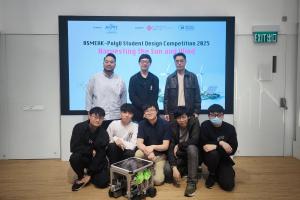
IMechE Design Challenge 2026: External Pipe Climbing Robot for Inspection and Maintenance Applications
This project was developed for the IMechE Design Challenge 2026. It involves the design and fabrication of a compact external pipe climbing robot that can move autonomously along a vertical pipe while carrying a variable chain load. The device is required to climb upwards, contact the top barrier, return to the starting position, and release the load at a designated section.
The project demonstrates the potential application of climbing robotic technologies in industrial inspection and maintenance. Similar systems may be further developed for checking pipes, wire ropes and cable systems, such as building services pipework, suspension bridge cables, overhead utility lines and lift/elevator ropes. These applications are particularly relevant where access is difficult, confined, elevated or potentially hazardous.
By reducing the need for scaffolding, working-at-height operations and manual inspection, such robotic systems can help improve safety, efficiency and consistency in condition monitoring. Through this project, students applied mechanical design, power transmission, control, prototyping and testing skills to address practical engineering needs related to safety, accessibility and automation. |
|
4 |
HD in Computer and Data Engineering |
SEMSS - Smart Escalator Maintenance Safety System The system integrates an AI camera for real-time detection of personnel within hazardous zones, combined with a smart barrier that provides clear visual status indication. It includes a delay starter mechanism that introduces a controlled time buffer before system activation, allowing operators sufficient reaction time. A two-button starter requires simultaneous confirmation from both ends of the escalator, ensuring coordinated operation and eliminating risks caused by miscommunication. All components are designed with a non-destructive installation approach, enabling seamless integration into existing escalator control systems without structural modification. The system supports wireless communication and flexible placement, making it suitable for retrofit applications across different sites. SEMSS provides a practical, scalable solution by combining intelligent monitoring with controlled activation, improving operational safety while maintaining system compatibility. |
|
5 |
HD in Computer and Electronic Engineering |
AquaPulse
|
|
6 |
DVE(Artificial Intelligence and Robotics) |
Smart Racket |
|
7 |
HD in Building Services Engineering |
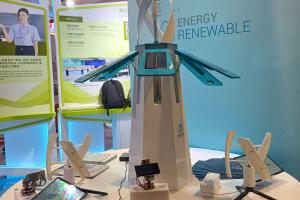
Sustainable Energy-Saving Water Curtain Wall |
|
8 |
HD in Building Services Engineering |
ReCondense – Green Engineering Cycle System for Air-Conditioning Condensate Water Recovery |
|
9 |
HD in Building Studies |
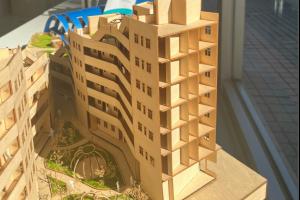
Ma Tau Wai Estate 1962 |
|
10 |
HD in Architectural Technology and Design |
Digital Twins (BIM + AI) - Sha Tin "Tsang Tai Uk" Conservation Works |
|
11 |
HD in Automotive Engineering |
Enhancement of Fuel Tank Empty Alarm System for Frontloaders |
|
12 |
DVE(Electronic and Computer Engineering) |
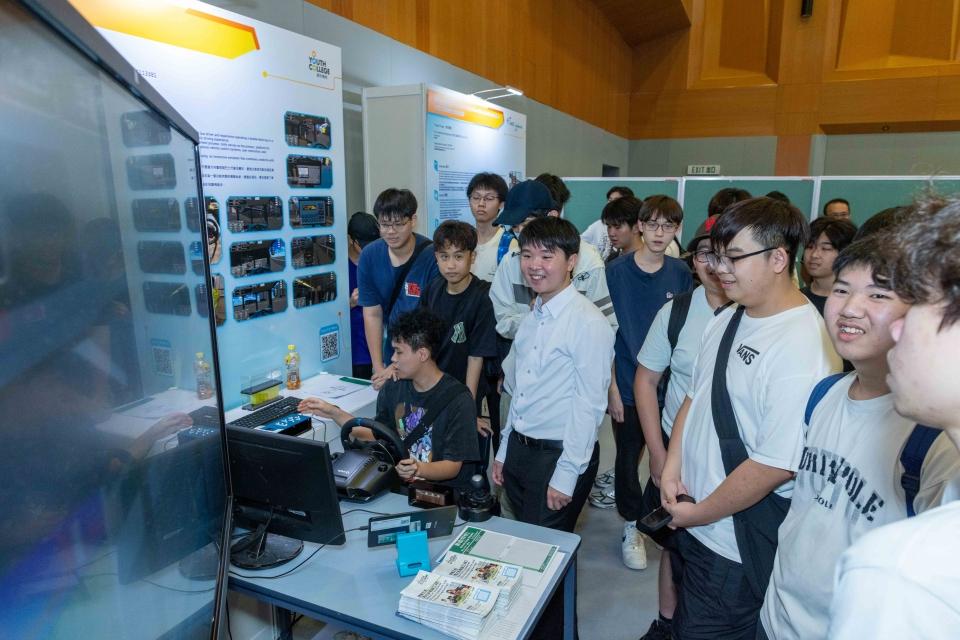
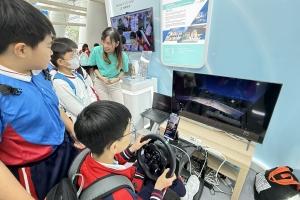
Bus Driver Simulator |
|
13 |
HD in Building Studies |
Old Building Renovation
|
|
14 |
HD in Computer and Electronic Engineering |
AI-Powered Smart Bollard Network for Pedestrian Safety |
|
15 |
HD in Architectural Studies |
Study on the Youth Centre Design Through the Integration of High-Energy Youth Activities |
|
16 |
HD in Computer and Electronic Engineering |
An Intelligent Human–Computer Interface Using Facial Expression Recognition Technology |
|
17 |
Diploma of Vocational Baccalaureate (Engineering) FS113850 |
AI-Driven Fitness Grip Ball |
|
18 |
HD in Mechanical Engineering |
A Mechanical Design On Exoskeleton Mount To Provide Walking Assistance For People With Disabilities |
|
19 |
HD in Building Services Engineering |
AIoT-Based Fire Escape Passage Safety Monitoring System |
|
20 |
Higher Diploma in Computer and Data Engineering EG114405 |
SmartRescue: Indoor Emergency Location Sharing System |
|
21 |
Higher Diploma in Automotive Engineering |
Conversion of Conventional Vehicle Chassis into Battery-Electric Propulsion Systems |



.jpg)


.jpg)
.jpg)
.jpg)
.jpg)
.jpg)
.jpg)
 .jpg)
.jpg)
.jpg)
.jpg)

.jpg)

.jpg)
.jpg)
.jpg)
.jpg)

.jpg)

.jpg)
.jpg)
.jpg)
.jpg)
.jpg)
.jpg)
.jpg)
.jpg)

.jpg)
.jpg)
.jpg)
.jpg)
.jpg)


